Keynote Speakers
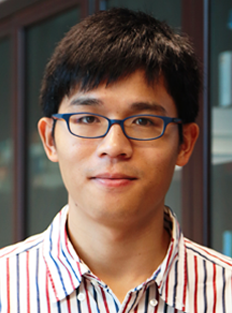
Prof. LONG, Zhuoyu, Daniel
Professor Department of Systems Engineering and Engineering Management Department of Decisions, Operations, and Technology (by courtesy) The Chinese University of Hong Kong
Affiliation:
- BS (Tsinghua University)
- MSc (Chinese Academy of Science)
- PhD (National University of Singapore)
Topic:
- Supply chain risk management.
- Project management.
- Inventory control.
- Target-based risk management.
- Robust optimization
Short Bio: Daniel Zhuoyu Long is a Professor in the Department of Systems Engineering and Engineering Management at The Chinese University of Hong Kong. Previously, he received his Bachelor’s degree from Tsinghua University in 2005, Master’s degree from Chinese Academy of Sciences in 2008, and Ph.D. from National University of Singapore Business School in 2013, joining CUHK in the same year. His research primarily focuses on distributed robust optimization theory and its applications to various operations management problems, such as logistics and supply chain management, project management, healthcare operations management, and revenue management. His work was elected as a finalist for the 2021 Best OM Paper in OR, and received the 2022 CSAMSE Best Paper Award (First Prize) and 2024 CSAMSE Best Paper Award (Second Prize). He currently serves as an Associate Editor for the MSOM Journal.
Title:
Supermodularity and Structure in Data-Driven Optimization under Uncertainty
Abstract:
Supermodularity is a fundamental structural property that enables powerful monotonicity results and tractable analysis in complex decision problems. In this keynote, I present a unified perspective on supermodularity in optimization under uncertainty, drawing on two recent works. The first establishes general conditions under which supermodular structure is preserved under parameterized transformations, providing a systematic framework for deriving comparative statics in models with uncertainty and decision-dependent parameters. The second demonstrates how supermodularity can be leveraged in data-driven and distributionally robust optimization to obtain interpretable and robust policies across applications such as supply chains, healthcare operations, and revenue management. Together, these results highlight the role of supermodularity as a unifying principle connecting classical theory with modern data-driven optimization.
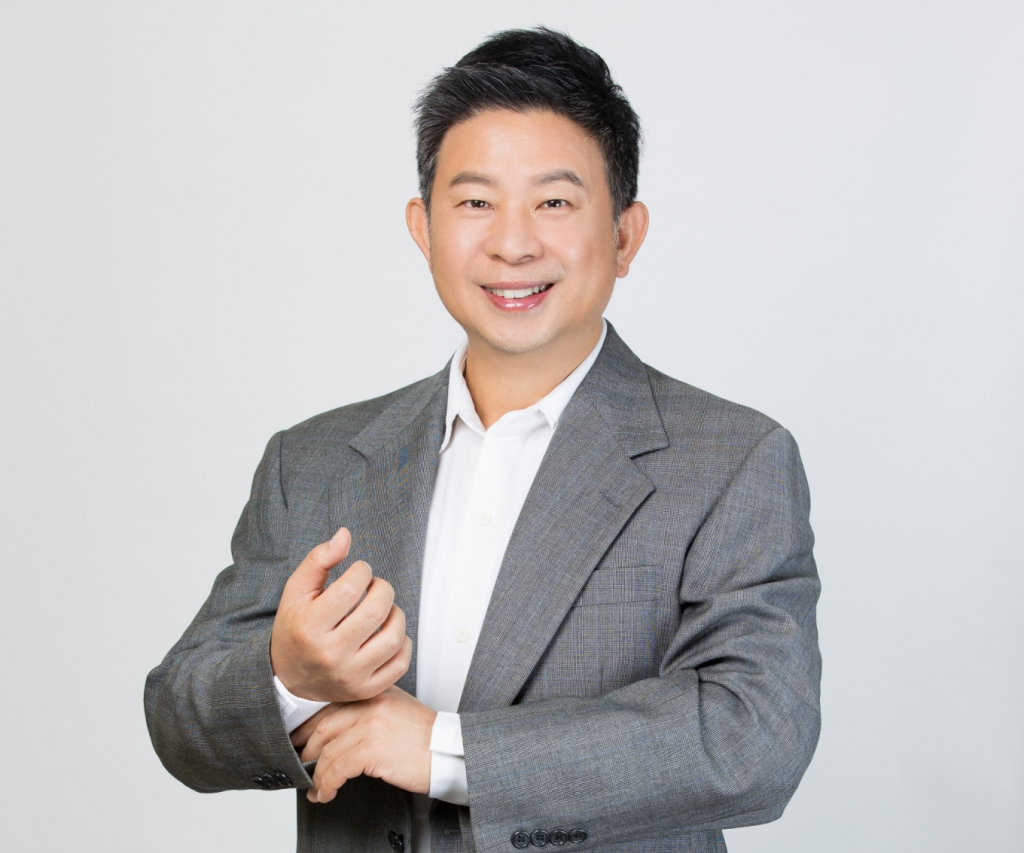
Yenming J. Chen
Distinguished Professor in the Department of Information Management at National Kaohsiung University of Science and Technology, Taiwan.
The Current Trend of LLM Repurposing: Robust Optimization with Uncertainty Resampling
Abstract
- Large language models are rapidly being repurposed from text generators into computational partners for decision-making under uncertainty. This keynote presents this trend through robust optimization with uncertainty resampling.
- Classical robust optimization depends on uncertainty sets specified in advance. Such models are mathematically principled, but they often fail to capture localized risks, heterogeneous assets, evolving hazards, and context-dependent priorities. The central question is how unstructured knowledge can be transformed into reliable optimization inputs without requiring extensive manual modeling.
- The framework uses LLMs to extract tacit local knowledge from reports, documents, narratives, and pretrained representations. The LLM then supports the construction of context-specific uncertainty sets, the translation of qualitative priorities into quantitative model components, and the generation of calibrated uncertainty samples. Robust optimization remains the mathematical core, while the LLM provides adaptive contextualization. The next generation of intelligent decision systems should definitely utilize LLM. However, LLM repurposing is not the replacement of optimization, but its augmentation. By coupling language-based knowledge extraction with robust decision models, one can build systems that are less conservative, more localized, and more resilient under distributional uncertainty.
Short Bio: Yenming J. Chen is a Distinguished Professor in the Department of Information Management at National Kaohsiung University of Science and Technology, Taiwan, where he also serves as Director of the AI Sensing and Automation for Low-Carbon Research Center. He holds a joint appointment with the Department of Medical Informatics at Kaohsiung Medical University.
Professor Chen earned his Ph.D. in Systems Science and Mathematics from Washington University in St. Louis in 1998. His research integrates intelligent computing and scientific management with cross-disciplinary applications in generative AI, technology management, fault detection, game theory, risk analysis, and precision healthcare. He has published over 70 SCI/SSCI-indexed journal articles, including 17 in high-impact Q1 journals, authored four professional books, and holds four invention patents. He also serves as associate editor for several leading SSCI/SCI journals, including Transportation Research Part E and IEEE Transactions on Systems, Man and Cybernetics: Systems.
Professor Chen has been awarded 15 consecutive three-year research grants from the National Science Council and has received his university’s Distinguished and Outstanding Academic Awards for 12 consecutive years. In the past five years, he has led 66 research projects, of which nearly two-thirds were supported by private industry. As an educator, he has mentored students to 34 national awards, including multiple first-place honors featured in the media. He has also developed applied systems that extend academic innovations into industry-university collaborations.